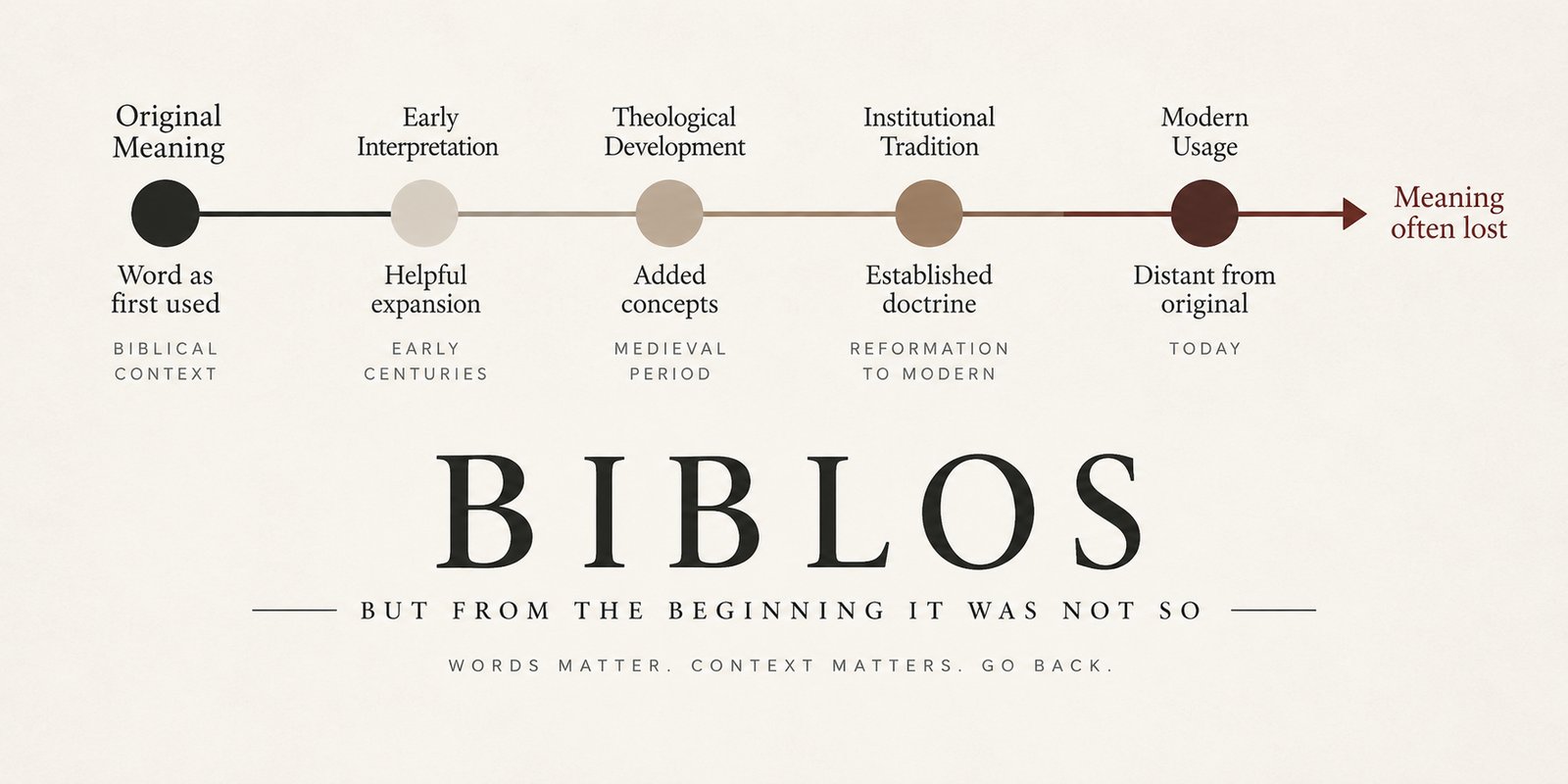
Someone very unique in history had the boldness to deconstruct the unbiblical theology of centralization via "State Churches" by correctly translating a handful of words, show proper translation from the Koine Greek and Hebrew (not Latin translation) into the crude, heretical language of "English." He thusly reasserted the correct view on critically important words that had acquired new, unintended meaning. He was burnt to death for his resolve and his translation, which largely became the guide for famous subsequent English translations, celebrates its 500th year this year in 2026.
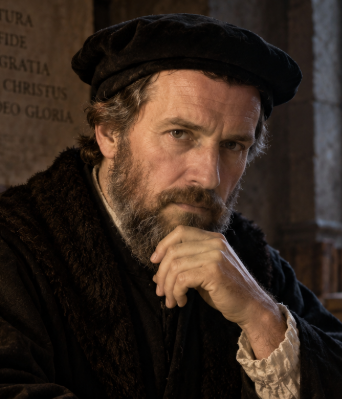
William Tyndale was born around 1494 in Gloucestershire, England, during a time when access to Scripture was tightly controlled by the "State Church".
He studied at the University of Oxford and Cambridge. At the latter, the conviction grew that scripture should be accessible in the common language of the people.
He famously declared:
“I will cause a boy that driveth the plough shall know more of the Scripture than thou dost.
Tyndale sought permission in England to translate the Bible into English—but was denied by Church authorities. At the time, translating Scripture without approval was considered dangerous and even heretical.
So he left England in 1524 and moved to mainland Europe, working in cities like Hamburg and Worms.
In 1526, he completed and printed the first English New Testament translated directly from Greek, not Latin.
This was revolutionary.
Copies were secretly smuggled into England, often hidden in cloth shipments or barrels.
Tyndale was eventually betrayed by a man named Henry Phillips and arrested in 1535 near Antwerp. Also, the Spanish Inquisition was in full force, eliminating anything deemed hererical. He was imprisoned in Vilvoorde Castle and spent about 16 months in harsh conditions, continuing to write and requesting basic needs like a cloak and Hebrew Bible.
In 1536, Tyndale was tried for heresy. He was executed by strangulation and then burned at the stake. His final recorded prayer:
“Lord, open the King of England’s eyes.”
Tyndale’s influence is enormous—arguably unmatched in English biblical history. Much of his work was later incorporated into the King James Version. It is estimated that 80–90% of the KJV New Testament is directly based on Tyndale’s wording. Phrases we still use today come from Tyndale:
“Let there be light”
“The powers that be”
“My brother’s keeper”
“Fight the good fight”
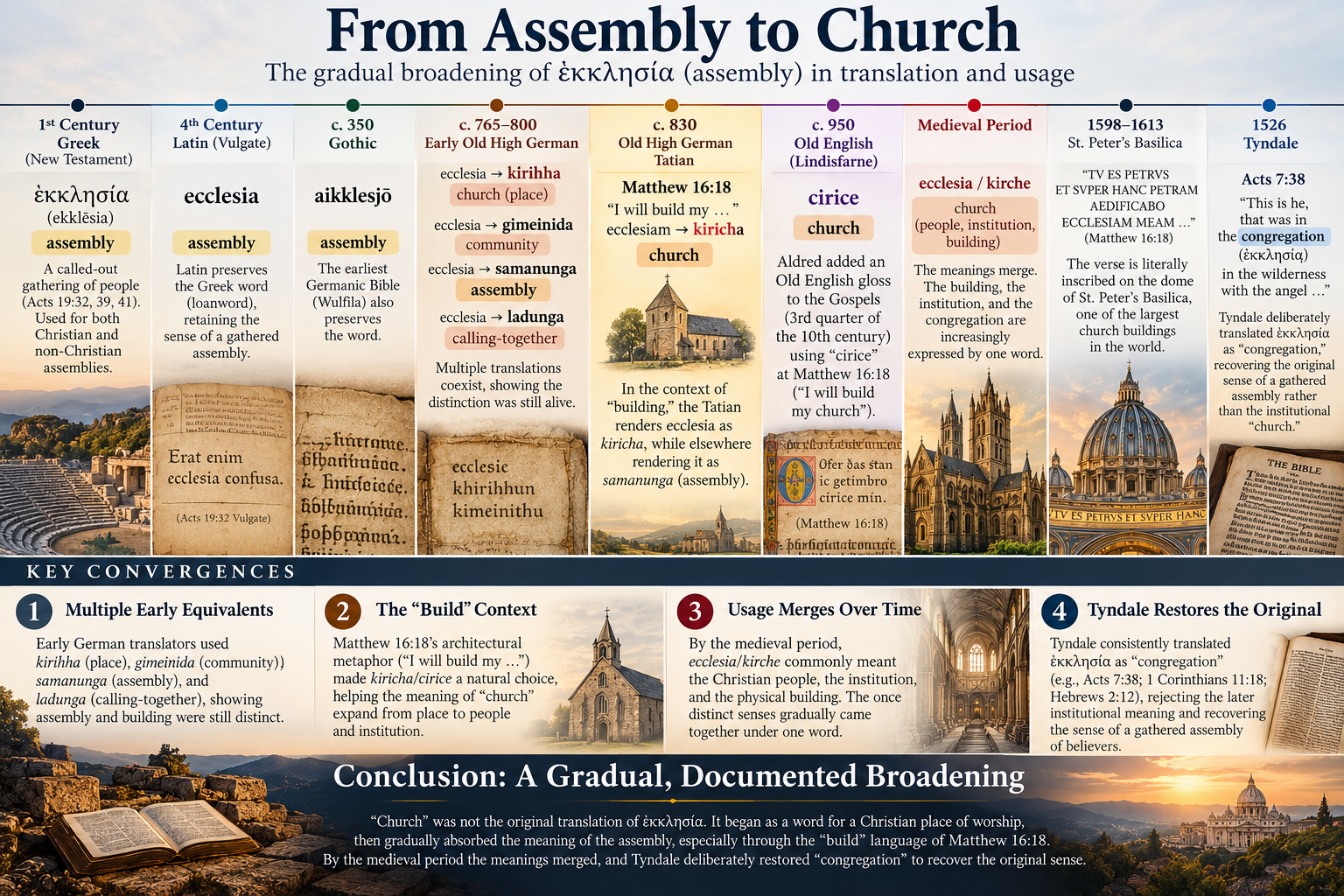
And specific words that reset the correct, original meaning without State Church bias: congregation instead of "church" and "love" rather than charity and overseer rather than "bishop."
Tyndale never saw the success of his work in his lifetime. Yet within a few years of his death:
English Bibles were legalized in England
His prayer—“open the King’s eyes”—was effectively answered
His life is one of the clearest examples in history of a single linguistic act reshaping civilization.
Tyndale was born into a respectable but not noble family in Gloucestershire, likely under the name Hychyns (or Hutchins), with “Tyndale” possibly being a family alias tied to land or lineage.
What we can reasonably reconstruct:
Social class: Lower gentry or well-off yeoman (educated, land-connected, but not aristocratic)
Region: Rural western England—close to Welsh borders, a place with strong oral traditions and linguistic diversity
Education access: His family clearly valued learning—sending him to Oxford at a young age (likely early teens)
This matters:
He grew up close to common people (farmers, laborers), which likely shaped his conviction that Scripture must be understood by ordinary people—not just clergy. There is no historical evidence that William Tyndale ever married or had children. He was focused and devoted.
At least four forces or the results thereof converged during his time that benefited his efforts: the fall of Constantinople in 1453, the spread of Greek scholars west, the Renaissance and ad fontes ("to the sources"), Gutenberg's printing press and Erasmus published his Greek New Testament in 1516. History had been preparing the ground for a century and one young English man stepped into it.
He was in his 30s. He was not a "Reformer". He was not an established authority. He was deeply connected with "common people." He was not translating for scholars but rather against the monopoly of scholars.
For 1,000 years the Latin Vulgate translation was "the authority." He restored the view the Hebrew and Greek was the source and the real authority. This was a direct challenge to the authority structure of Western Civilization.
A drunken priest allegedly would later dig up his bones and scatter them in a river near Vilvoorde. He was erased physically but his words spread uncontrollably. Millions to now billions have been influenced by his sacrifice.